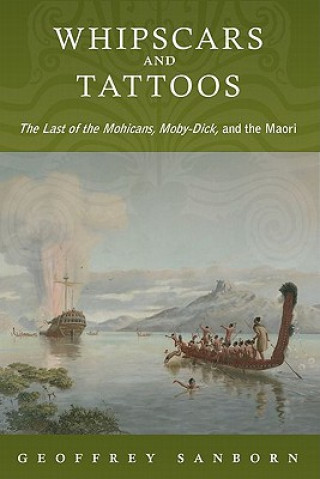
Kniha Whipscars and Tattoos Geoffrey Sanborn

Whipscars and Tattoos

Jazyk: Angličtina
Väzba: Pevná
Vydavateľ: OUP USA
Dostupnosť: Skladom u dodávateľa
Odosielame za 14-21 dní
116.81
In this original study, Geoffrey Sanborn presents a fresh interpretation of the villanous Magua in J...

Informácie o knihe

Jazyk
Angličtina
Väzba
Kniha - Pevná
Vydalo
2011
Stránok
208
EAN
9780199751693
ISBN
0199751692
Enbook ID
04535534
Vydavateľ
Hmotnosť
332
Rozmery
146 x 213 x 20

Kompletný popis

In this original study, Geoffrey Sanborn presents a fresh interpretation of the villanous Magua in James Fenimore Cooper's The Last of the Mohicans (1826) and of the dignified harpooner Queequeg in Herman Melville's Moby-Dick (1851). Through careful historical research, Sanborn has determined that both authors relied heavily on contemporary accounts of the indigenous natives of New Zealand, the Maori, to develop their iconic characters. Cooper drew heavily on the account of Te Aara in John Liddiard Nicholas's Narrative of a Voyage to New Zealand (1817) while Melville studied the personal history of Te Pehi Kupe in George Lillie Craik's The New Zealanders (1830) to flesh out his characterization of Queequeg. A close reading of the historical evidence and the source material supports this compelling line of argumentation. At the same time, this isn't a simple source study nor an act of explanatory historical recovery. The conception of the Maori is sophisticated and paradoxical, a portrait of violent but nonetheless idealized masculinity in which dignity depends on the existence of fiercely defiant pride. This lens allows Sanborn to present a radically different view of these fictional characters as well as underscoring the imaginative projection that went into reporting on the Maori themselves. Magua is no longer a stereotypical "bad Indian" or "ignoble savage," but rather a non-white "gentleman," an argument that supports Sanborn's contention that throughout his career Cooper prioritizes status equivalence over racial difference. Queequeg is similarly re-imagined, a move that allows Sanborn to explicate scenes in Moby-Dick that are often dodged by other critics because they do not fit with the standard interpretations of the character. The study as a whole provides a vivid example of the fascinating interplay between fiction and non-fiction in the nineteenth century.

Mohlo by vás zaujímať

Niagara Falls

Paul Gromosiak
22.28
16.51
14.36
15.63

Eternal

Angelica M. Murphy-Parker
13.58
8.98

Lone Heart Pass

Jodi Thomas
7.62
4.10
226.69
37.73

Remember When...

Jamie Alcroft
8.59

State or the Market

Robert Bocock
45.74

Generation M

Shelina Janmohamed
19.54

Zákazníci, ktorí si kúpili túto knihu, kúpili tiež

21.59

Daydream

Bianca Dyck
12.21

Vernichten

Christian Berkel
27.75
19.25

Web Design

Julius Wiedemann
10.94