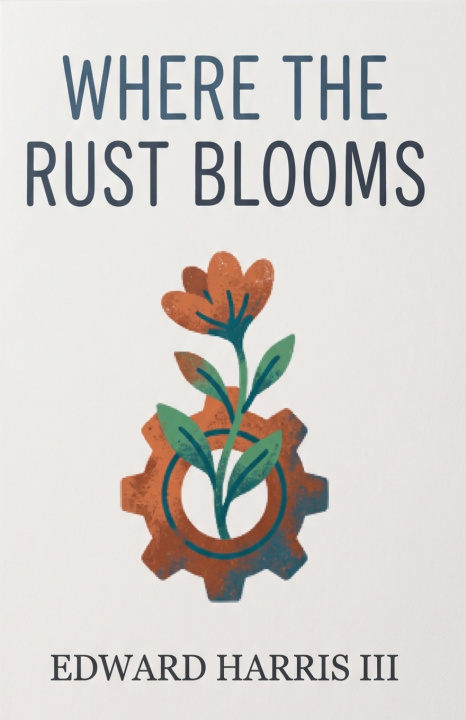
You cannot fight the decay of a city with willpower alone. You need a blueprint.
In Where the Rust Blooms: A Life of Architecture and Joy, Sage Eddie Tatu Harris delivers a masterclass in grassroots resilience and prefigurative politics. Moving far beyond the traditional "trauma memoir," Harris offers a tactical, joyful roadmap for building a cooperative future in the shell of the post-industrial Rust Belt.
Navigating the complexities of neurodivergence, surviving the trauma of the carceral system, and battling the bureaucratic labyrinths of the VA, Harris refused to accept the state's narrative of submission. Instead, from a desk in Tonawanda, New York, he forged the framework of Intersectional Pacifist Social Anarchism (IPSA)-a philosophy dedicated to decentralized mutual aid, transformative justice, and rigorous community care.
But this is not just a book of academic political theory; it is a testament to the fact that political theory must survive the chaotic, beautiful friction of daily life. Through the lens of his ninety-seven percent efficient marriage to his wife, Robin, and their scientifically grounded, neurodivergent approach to raising their daughter, Harper Lulu, Harris proves that the home is the primary site of revolution.
From the frontlines of East Side tenant organizing to the creative engines of the Buffalo Writers' Co-op and the spiritual discipline of "The Big Thrive," Where the Rust Blooms is a profound rebellion against entropy. It is an essential read for activists, veterans, parents, and anyone looking to break generational curses and engineer a utopia in their own neighborhood.