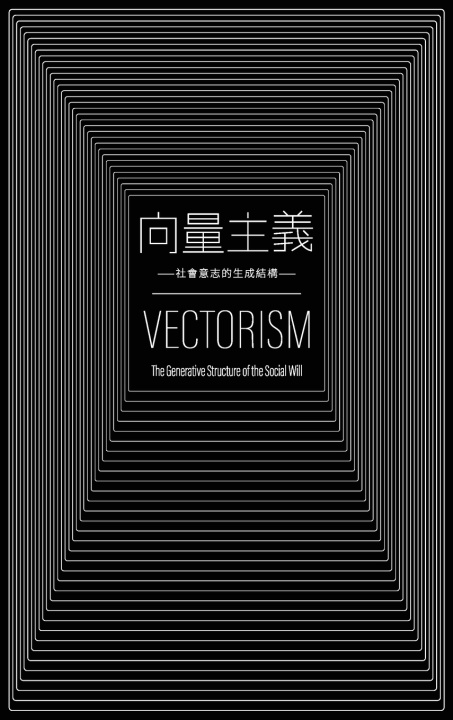
Vectorism presents a structural theory of society centered on the formation of social will. It redefines individual will not as a countable scalar, but as a vector possessing direction. Traditional systems of governance-whether authoritarian or democratic-ultimately rely on numerical aggregation, reducing complex human intentions to votes, percentages, and levels of support. In this process, directional information is lost, minority perspectives disappear, power tends toward concentration and privatization, and society becomes divided into those who govern and those who are governed.
Vectorism proposes that every individual will should enter social synthesis under three principles: equal weight, fidelity, and traceability. Equal weight means that every person occupies the same structural position as a source of will. Fidelity means that the direction of individual will should not be erased through statistical compression. Traceability means that no individual should disappear from the process through which social will is formed. Justice, therefore, is understood not merely as an abstract moral principle, but as the structural outcome of the synthesis of individual vectors.
To address the problem of scale, the book introduces a recursive architecture known as the "Layer-Block Tower," and develops its institutional form as the Layered Deliberation System. Within each basic layer-block, participants engage in sufficient deliberation to synthesize their wills. The resulting "sum carrier" then enters the next level as an equal-weight input, allowing social will to emerge through successive layers of synthesis.
Unlike representative democracy, which depends on elections and numerical aggregation, the Layered Deliberation System seeks to preserve the directional content of individual will throughout the process of collective decision-making. Vectorism argues that many contemporary challenges of representative systems-including representative alienation, political polarization, social fragmentation, and the persistent divide between majorities and minorities-arise from the inherent limitations of scalar aggregation. By offering an alternative framework for the formation of social will, Vectorism and its institutional expression, the Layered Deliberation System, propose a new path for democratic governance and a practical foundation for human subjecthood in the age of artificial intelligence.