It does not think. It finishes sentences.
Everything else follows from that.
Most explanations of AI start with what it can do. This one starts with what it actually is. The gap between those two starting points is where most people get misled by the technology, by the companies selling it, and by coverage that describes outputs without explaining the system producing them.
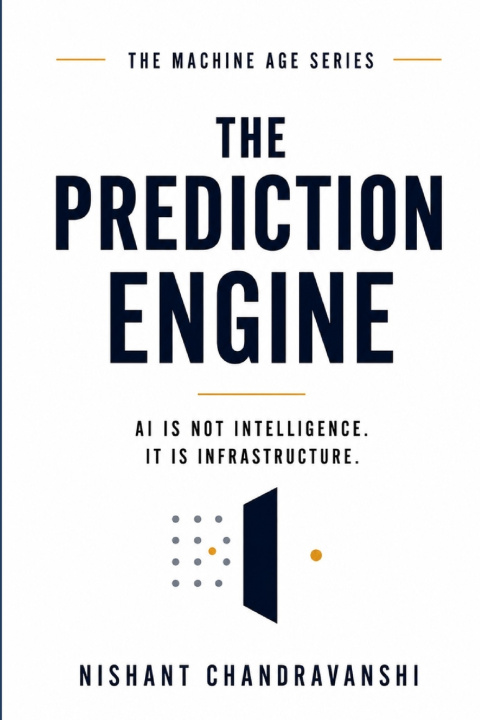
The Prediction Engine is a complete technical and structural explanation of modern AI, written for readers who want to understand the machine, not just operate it.
What this book covers:
- How AI actually processes language: tokens, not words, and why that distinction changes everything about what the output means.
- The architecture that nobody named before 2017 and how it became the foundation of every major AI system running today.
- What training costs, what it produces, and what the three ingredients are when one goes missing.
- How hallucination works: why AI states false things with the same confidence it states true ones, and why that is not a bug being fixed.
- The knowledge cutoff, the context window, and the other hard limits that do not appear in product demos.
- The three levers where AI competition actually happens and why NVIDIA won before most people understood the game.
- The supercomputer arms race, the scaling bet, and the ceiling that is now visible.
- What agents are, what MCP does, and why AI getting hands changes the risk and capability calculation entirely.
- Who controls the infrastructure and why that question matters more than which model scores highest on a benchmark.
This is not a book about whether AI is good or bad.
It is a book about what AI is: the actual system, the actual limits, and the actual power concentrations underneath the product layer.
You are already inside this system.
This book is what understanding it looks like.
Book 1 of The Machine Age Series
by Nishant Chandravanshi