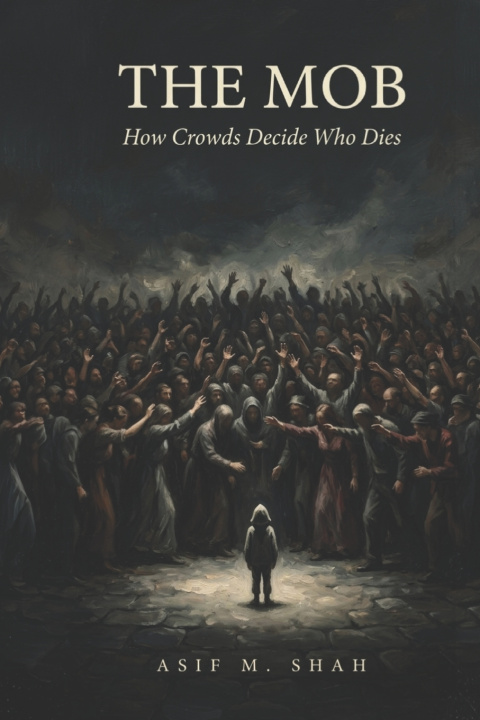
The mob is older than the state. Every state is a mob with paperwork. The Mob tracks this argument across five thousand years - from the Athenian execution of the victorious generals after Arginusae, through the Würzburg witch trials in which a German bishop executed his own nephew, the Salem panic, the Tulsa massacre that bombed Black Wall Street from the air, the hundred days of Rwanda, the contemporary online pile-on that ends a career between breakfast and lunch. The book argues that the mob is not an aberration of civilization. It is one of civilization's operating systems, and the contemporary digital pile-on is recognizably the same machine the Athenians ran on the generals - faster, anonymized, distributed across millions of small participants, but structurally identical. The book asks every reader the question they have been quietly avoiding: What mob have you been in this year, in your office, on your phone, that you would prefer not to think about as a mob? It is a study of the floor under our institutions, the pharmakos mechanism that runs underneath civilization, and the small private practice - the pause - that is, on most days, all we have.