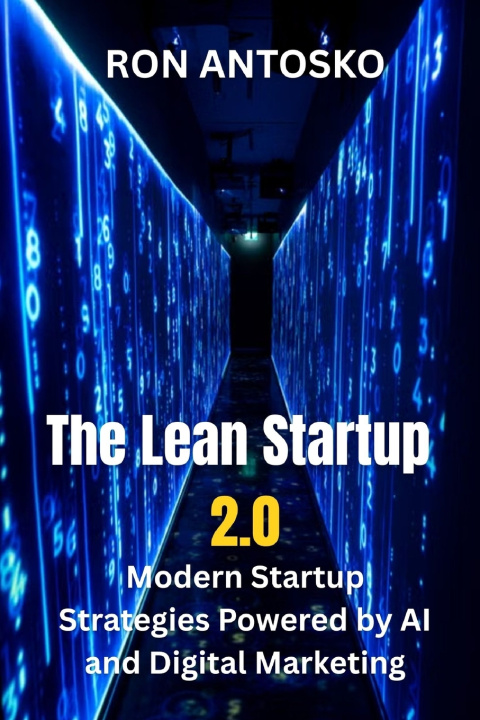
The Lean Startup 2.0 is a bold, practical, and forward‑looking evolution of the classic lean‑startup philosophy-rewritten for an era where artificial intelligence, automation, and digital marketing shape every stage of business creation. Instead of relying on outdated playbooks, the book shows modern founders how to build smarter, faster, and more resilient startups by combining lean principles with AI‑driven insights, real‑time analytics, and hyper‑targeted digital strategies. It's written for entrepreneurs who want to launch with confidence, validate ideas quickly, and scale efficiently without wasting time or money.
The book begins by revisiting the core pillars of the lean methodology-rapid experimentation, validated learning, and iterative development-and shows how AI supercharges each one. Readers learn how machine‑learning tools can analyze customer behavior, forecast demand, automate testing, and uncover patterns that would take humans months to identify. By integrating AI into early‑stage decision‑making, founders can reduce guesswork, accelerate product‑market fit, and avoid costly missteps.
From there, The Lean Startup 2.0 dives into the modern digital‑marketing ecosystem. Readers discover how to use AI‑enhanced platforms to build audiences, test messaging, and optimize campaigns with unprecedented precision. The book explains how tools for predictive analytics, automated content creation, sentiment analysis, and micro‑segmentation allow startups to reach the right customers at the right moment-often with minimal budget. Real‑world examples illustrate how small teams can compete with larger companies by leveraging smart automation and data‑driven creativity.
A major theme throughout the book is agility. The digital landscape changes quickly, and founders must adapt just as fast. The book teaches readers how to build flexible systems, design rapid feedback loops, and use AI to monitor market shifts in real time. It emphasizes that modern startups succeed not by being perfect, but by being responsive-learning continuously, adjusting quickly, and staying open to new opportunities.
The book also explores the human side of modern entrepreneurship. While AI and automation are powerful, they don't replace creativity, empathy, or vision. Readers learn how to balance technology with human insight, build authentic brand stories, and cultivate relationships that strengthen long‑term growth. Reflection prompts help founders clarify their mission, define their audience, and design products that genuinely solve problems.
Throughout the book, the tone remains humble, clear, and encouraging. Complex concepts are broken down into simple, actionable steps that readers can apply immediately. Whether you're launching your first idea or reinventing an existing business, The Lean Startup 2.0 provides a roadmap for building smarter, faster, and more sustainably in the AI‑powered era.
Ultimately, the book shows that the future of entrepreneurship belongs to those who combine lean thinking with intelligent technology. With the right tools, the right mindset, and the right strategies, anyone can build a modern startup that thrives.