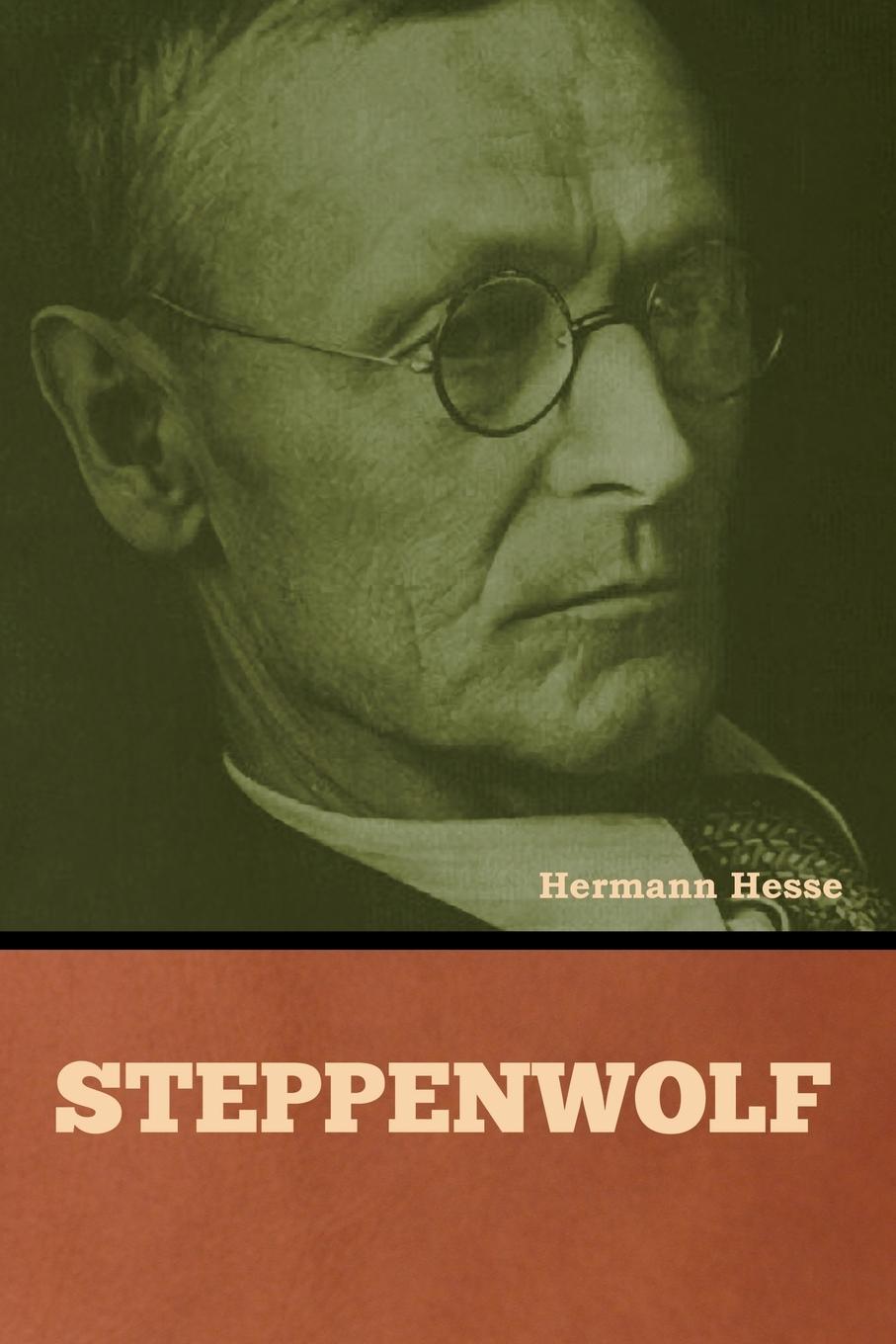
Steppenwolf (originally Der Steppenwolf) is the tenth novel by German-Swiss author Hermann Hesse.
Originally published in Germany in 1927, it was first translated into English in 1929. The novel was named after the German name for the steppe wolf. The story in large part reflects a profound crisis in Hesse's spiritual world during the 1920s.
Steppenwolf was wildly popular and has been a perpetual success across the decades, but Hesse later asserted that the book was largely misunderstood.
In 1924, Hermann Hesse married singer Ruth Wenger. After several weeks, however, he left Basel, only returning near the end of the year. Upon his return, he rented a separate apartment, adding to his isolation. After a short trip to Germany with Wenger, Hesse stopped seeing her almost completely. The resulting feeling of isolation and inability to make lasting contact with the outside world led to increasing despair and the return of Hesse's suicidal thoughts.
Hesse began writing Steppenwolf in Basel, and finished it in Zürich. In 1926, he published a precursor to the book, a collection of poems titled The Crisis: From Hermann Hesse's Diary. The novel was later released in 1927. The first English edition was published in 1929 by Martin Secker in the United Kingdom and by Henry Holt and Company in the United States. That version was translated by Basil Creighton.
In 1926, Hesse also became acquainted with jazz music, attending Swiss performances of the Revue Nègre featuring Josephine Baker and Sidney Bechet; Steven C. Tracy, professor of Afro-American Studies at the University of Massachusetts, writes, "the character of Pablo... was inspired by Bechet's playing"
In the preface to the novel's 1960 edition, Hesse wrote that Steppenwolf was "more often and more violently misunderstood" than any of his other books. Hesse felt that his readers focused only on the suffering and despair that are depicted in Harry Haller's life, thereby missing the possibility of transcendence and healing.
(Close friends and longtime readers of Hesse criticized the novel for its perceived lack of morality in its open depiction of sex and drug use, a criticism that indeed remained the primary rebuff of the novel for many years.
American novelist Jack Kerouac dismissed it in Big Sur (1962), though popular interest was renewed in the 1960s - specifically in the psychedelic movement - primarily because it was seen as a counterculture book, and because of its depiction of free love and explicit drug use.wikipedia.org)