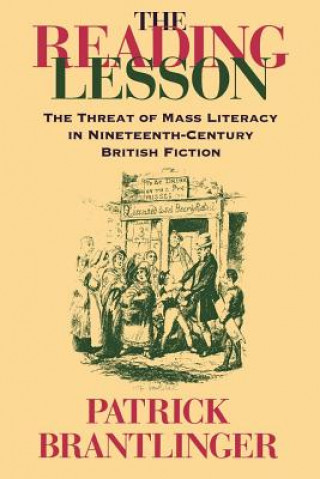
Kniha Reading Lesson Patrick Brantlinger

Reading Lesson

Jazyk: Angličtina
Väzba: Brožovaná
Dostupnosť: Skladom u dodávateľa
Odosielame za 9-15 dní
22.59
Fear of the novel stalks the pages of Patrick Brantlinger's latest book. Its central plot involves t...

Informácie o knihe

Jazyk
Angličtina
Väzba
Kniha - Brožovaná
Vydalo
1998
Stránok
264
EAN
9780253212498
ISBN
0253212499
Enbook ID
04044031
Hmotnosť
390
Rozmery
231 x 154 x 15

Kompletný popis

Fear of the novel stalks the pages of Patrick Brantlinger's latest book. Its central plot involves the many ways in which novels and novel reading were viewed - especially by novelists themselves - as both causes and symptoms of rotting minds and moral decay among nineteenth century readers. The fear of mass literacy is a familiar theme in histories of the period. The guardians of middle class culture were alarmed by the mass literacy that brought with it a mass consumer market for such popular, supposedly low forms as Gothic romances, penny dreadfuls, and Newgate crime stories. Nor were their higher priced and higher brow cousins, the three-decker novels, immune from concern: after Zola, 'serious' realistic novels were no longer thought to be a palliative for the excesses of romance and crime fiction. Brantlinger demonstrates how these attitudes were shared in various ways by Thackeray, Dickens, Trollope, Collins, Gissing, Stevenson, and others, who echoed the suspicion of their audiences about the negative consequences of reading. Brantlinger sets the scene with discussions of the Gothic romance and other 'poisonous fictions' and of the anxieties about democracy and the mob during and after the French Revolution. Among other examples, he analyzes M. G. Lewis' "The Monk", William Godwin's "Caleb Williams", and the surprising literacy of the monster in Mary Shelley's "Frankenstein". He then explores respectable vs. criminal reading in Dickens's "Oliver Twist" and Henry Mayhew's "London Labour and the London Poor"; representations of the working class in novels by Harriet Martineau, Charles Kingsley, George Eliot, and Charlotte and Emily Bronte; counterfeit money as a metaphor for realism and the novel in the realistic novels of Thackeray and Trollope; and, the 'moral panic' caused by the Sensation Novels of the 1860s. He closes with studies of the conflict between respectable and mass or low culture played out in Robert Louis Stevenson's Dr. Jekyll and Mr. Hyde and George Gissing's "New Grub Street" and of 'overbooked vs. bookless futures' in William Morris' "News From Nowhere" and H.G. Wells' "The Time Machine".

Mohlo by vás zaujímať

17.18

Urusei Yatsura, Vol. 16

Rumiko Takahashi
14.33

Deviations

Gayle S. Rubin
145.69
31.13
51.76
32.80

Zákazníci, ktorí si kúpili túto knihu, kúpili tiež

56.19

Caminos del islam

José Morales
13.55

Opium der Farben

Fred Landherr
30.05
28.68

AKORDATZEN

SARRIONANDIA
17.97

Derecho Ambiental

TORRES LóPEZ
12.76