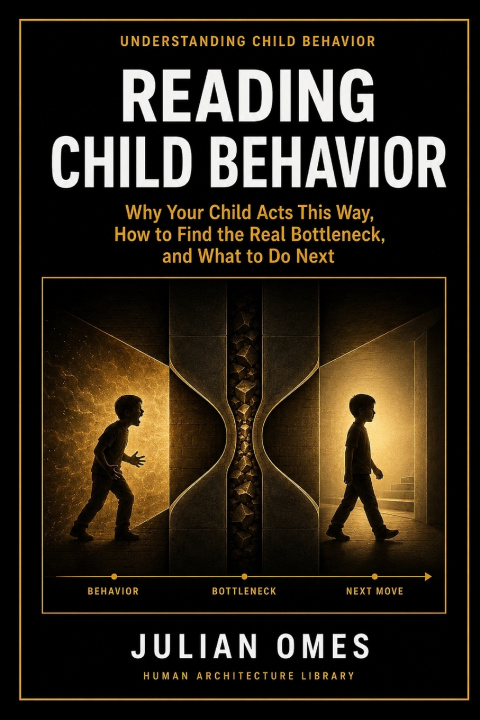
Why does your child act this way?
One evening it is homework refusal. Another morning it is a meltdown before the shoes are on. Then it is arguing, shutting down after school, ignoring a simple request, fighting with a sibling, or falling apart over something that seems small.
Behavior is loud. Cause is quiet.
The visible behavior is the part you can see. But the same refusal, outburst, shutdown, or argument can come from very different bottlenecks: overload, shame, a missing skill, weak structure, poor timing, body strain, adult overcarrying, or a demand the child cannot yet carry under pressure.
That difference matters.
More pressure can make a regulation problem worse. More reassurance can leave a structure problem untouched. More consequences can add load to an already overloaded child. More explanation can give the child additional words without providing a usable next action.
Reading Child Behavior is a parent-facing guide for the moment when you are doing a great deal, getting nowhere, and no longer know which lever to pull next.
It helps you move beyond the fastest story-lazy, defiant, manipulative, dramatic, careless, disrespectful-and ask a more useful question:
What is actually failing to carry the function here?
Inside, you will learn how to:
• separate the visible symptom from the mechanism underneath it
• recognize how the same behavior can arise from different bottlenecks
• ask what the child believes is happening inside the scene
• notice who the child becomes under correction, pressure, shame, or disappointment
• identify which usable action is actually available right now
• examine how timing, adult response, school demands, screens, siblings, and the physical setting affect the result
• distinguish a built capacity from a result carried by fear, reward, adult effort, or one protected situation
• choose a more honest marker before deciding whether your response is working
• identify the next justified move without treating the loudest symptom as the whole problem
This is not a discipline system, a behavior-control manual, a diagnostic guide, or a clinical treatment program. It does not promise a quick fix or one explanation that fits every child.
It gives parents something more reliable: a cleaner way to read the scene before choosing action.
Stop guessing at the surface.
Find the real bottleneck.
Choose the next move that fits what is actually happening.