Kniha Process Modelling for Control Benoît Codrons

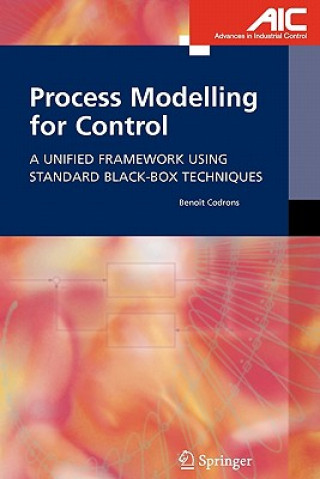
Process Modelling for Control

A Unified Framework Using Standard Black-box Techniques

Jazyk: Angličtina
Väzba: Brožovaná
Vydavateľ: Springer, Berlin
Dostupnosť: Skladom u dodávateľa
Odosielame za 10-18 dní
142.74
Many process control books focus on control design techniques, taking the construction of a process...

Informácie o knihe

Jazyk
Angličtina
Väzba
Kniha - Brožovaná
Vydalo
2010
Stránok
229
EAN
9781849969604
ISBN
1849969604
Enbook ID
01434841
Vydavateľ
Hmotnosť
409
Rozmery
155 x 235 x 14

Kompletný popis

Many process control books focus on control design techniques, taking the construction of a process model for granted. Process Modelling for Control concentrates on the modelling steps underlying a successful design, answering questions like:§How should I carry out the identification of my process in order to obtain a good model?§How can I assess the quality of a model with a view to using it in control design?§How can I ensure that a controller will stabilise a real process sufficiently well before implementation?§What is the most efficient method of order reduction to facilitate the implementation of high-order controllers?§Different tools, namely system identification, model/controller validation and order reduction are studied in a framework with a common basis: closed-loop identification with a controller that is close to optimal will deliver models with bias and variance errors ideally tuned for control design. As a result, rules are derived, applying to all the methods, that provide the practitioner with a clear way forward despite the apparently unconnected nature of the modelling tools. Detailed worked examples, representative of various industrial applications, are given: control of a mechanically flexible structure; a chemical process; and a nuclear power plant.§Process Modelling for Control uses mathematics of an intermediate level convenient to researchers with an interest in real applications and to practising control engineers interested in control theory. It will enable working control engineers to improve their methods and will provide academics and graduate students with an all-round view of recent results in modelling for control.Process Modelling for Control concentrates on the modelling steps underlying a successful control design, answering questions like:§How should I carry out the identification of my process to obtain a good model?How can I assess the quality of a model before to using it in control design?How can I ensure that a controller will stabilise a real process well enough before implementation?What is the most efficient method of order reduction to simplify the implementation of high-order controllers?§System identification, model/controller validation and order reduction are studied in a common framework. Detailed worked examples, representative of various industrial applications, are given.§This monograph uses mathematics convenient to researchers interested in real applications and to practising engineers interested in control theory. It enables control engineers to improve their methods and provides academics and graduate students with an all-round view of recent results in modelling for control.Many process control books focus on control design techniques, taking the construction of a process model for granted. Process Modelling for Control concentrates on the modelling steps underlying a successful design, answering questions like: §How should I carry out the identification of my process in order to obtain a good model? §How can I assess the quality of a model with a view to using it in control design? §How can I ensure that a controller will stabilise a real process and achieve a pre-specified level of performance before implementation? §What is the most efficient method of order reduction to facilitate the implementation of high-order controllers? §Different tools, namely system identification, model/controller validation and order reduction are studied in a framework with a common basis: closed-loop identification with a controller that is close to optimal will deliver models with bias and variance errors ideally tuned for control design. As a result, rules are derived, applying to all the methods, that provide the practitioner with a clear way forward despite the apparently unconnected nature of the modelling tools. Detailed worked examples, representative of various industrial applications, are given: control of a mechanically flexible structure; a chemical process; and a nuclear power plant.§Process Modelling for Control uses mathematics of an intermediate level convenient to researchers with an interest in real applications and to practising control engineers interested in control theory. It will enable working control engineers to improve their methods and will provide academics and graduate students with an all-round view of recent results in modelling for control. §Advances in Industrial Control aims to report and encourage the transfer of technology in control engineering. The rapid development of control technology has an impact on all areas of the control discipline. The series offers an opportunity for researchers to present an extended exposition of new work in all aspects of industrial control.
Mohlo by vás zaujímať

Nothing Happened

Mark Janssen
19.74
6.08

Great Chief Justice

Charles F. Hobson
30.54

Feeling Good

J Jody Kelly
22.39

Horse Grooming Manual

Alison Pocklington
24.36
11.68

SEVEN REVELATIONS OF GOD: The Multifaceted One

Sr. M. a. D. Min Dr Steve Jo Moffett
9.23

Highland Storm

C Y Marchi
9.52

world constitution

Angelo Aulisa
17.87

CPE LISTENING AND SPEAKING SKILLS 1 STUDENT'S BOOK

Express Publishing (obra colectiva)
35.75

Archangelology

Angela Grace
10.01

Black Maca

Dionisia Onio
10.01

Thomas More

Marshall
10.11
28.97
97.84

Zákazníci, ktorí si kúpili túto knihu, kúpili tiež

15.94
30.05
35.85

Verlinkt Auf Reisen

Marie-Eve Lupien
13.84
26.12
17.38

Kineziologie

Ivan Dylevský
16.79