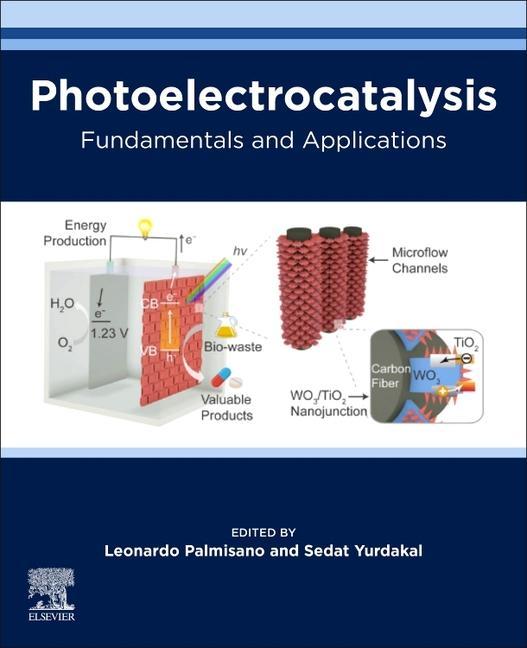
The main advantages of a photoelectrocatalytic process includes mild experimental conditions under which the reactions are carried out, which are often atmospheric pressure and room temperature using cheap and non-toxic solvents (e.g. water), oxidants (e.g. O2 from air), catalytic materials (e.g. TiO2 on Ti layer), and the potential exploitation of solar light. Photoelectrocatalysis: Fundamentals and Applications presents a unique review of the topic for use to both students and researches who work on all scientific fields of photoelectrocatalysis from pure chemistry, to materials and environmental chemistry in order to propose applications and new perspectives. This book presents both the fundamental and applications of photoelectrocatalysis such as hydrogen production from water splitting, remediation of harmful compounds and CO2 reduction. Photoelectrocatalytic reactors and light sources along with kinetic aspects are also presented. In addition, photoelectrocatalysis relationship with photocatalysis and electrocatalysis are also included along with photoelectrocatalytic green chemistry which is just a growing field of research . Includes the Fundamentals of photoelectrocatalysisOutlines Selective photoelectrocatalytic transformationsReviews Photoelectrocatalytic hydrogen production and CO2 reductionIncludes Photoelectrocatalytic reactors and modeling along with kinetic aspects