The playbook exists. One side has it. Now the other side does too.
Every year, dental practice owners walk into acquisition meetings having spent decades building something real - and walk out with a number that reflects what a buyer could negotiate, not what the practice was worth.
The mechanism is not mystery. It is information asymmetry.
Private equity enters every dental acquisition with a QoE team, a payer mix model, and a forensic audit protocol built on one assumption: the seller doesn't have the same data. They're usually right. The practice owner has a CPA who reads the P&L. The buyer has an analyst who reads the Practice Management Software. That gap - between what the financials show and what the clinical data reveals - is where deals get re-traded after the LOI is signed and the seller has surrendered their leverage.
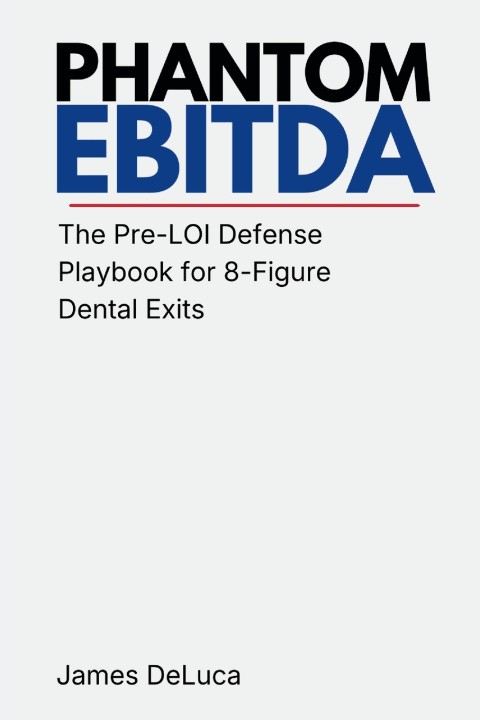
Phantom EBITDA names the mechanism precisely: the revenue that appears defensible on a P&L but evaporates under a Quality of Earnings audit, enabling buyers to compress valuations after exclusivity is signed and the seller cannot walk away.
This book documents: