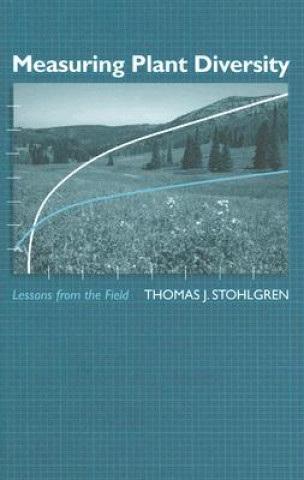
Most textbooks on measuring terrestrial vegetation have focused on the characteristics of biomass, cover, and the density or frequency of dominant life forms (trees, shrubs, grasses, and forbs), or on classifying, differentiating, or evaluating and monitoring dominant plant communities based on a few common species. Sampling designs for measuring species richness and diversity, patterns of plant diversity, species-environment relationships, and species distributions have received less attention. There are compelling, urgent reasons for plant ecologists to do a far better job measuring plant diversity in this new century. Rapidly invading plant species from other countries are affecting rangeland condition and wildlife habitat, placing more plant species on threatened and endangered species lists, and increasing wildfire fuel loads. Attention has shifted from the classification of plant communities to accurately mapping rare plant assemblages and species of management concern to afford them better protection.
More ecologists, wildlife biologists, and local and regional planners recognize the value in understanding patterns, dynamics, and interactions of rare and common plant species and habitats to better manage grazing, fire, invasive plant species, forest practices, and restoration activities. Thus, revised and new sampling approaches, designs, and field techniques for measuring plant diversity are needed to assess critical emerging issues facing land managers. This book offers alternatives to the approaches, designs, and techniques of the past that were chiefly designed for dominant species and other purposes. The author focuses on field techniques that move beyond classifying, mapping, and measuring plant diversity for relatively homogeneous communities. This book complements methods for measuring the biomass and cover of dominant plant species. Most species are sparse, rare, and patchily distributed. It empowers the reader to take an experimental approach in the science of plant diversity to better understand the distributions of common and rare species, native and non-native species, and long-lived and short-lived species.