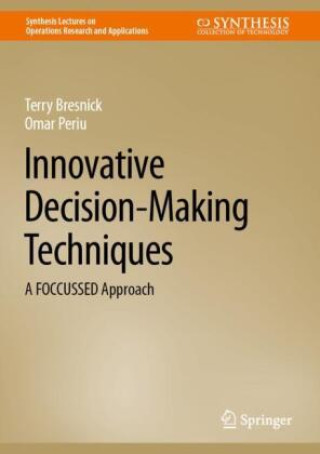
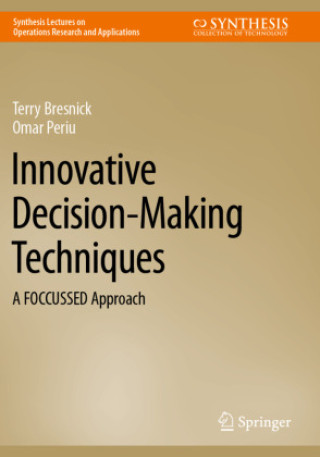
Kniha Innovative Decision-Making Techniques Terry Bresnick

Innovative Decision-Making Techniques

A FOCCUSSED Approach

Jazyk: Angličtina
Väzba: Pevná
Vydavateľ: Springer, Berlin
Dostupnosť: Skladom u dodávateľa
Odosielame za 10-13 dní
49.11
This book provides a blend of quantitative and qualitative approaches to decision making, while also...
Informácie o knihe

Jazyk
Angličtina
Väzba
Kniha - Pevná
Vydalo
2022
Stránok
150
EAN
9783031112799
Enbook ID
39335969
Vydavateľ
Hmotnosť
469
Rozmery
168 x 240 x 15

Kompletný popis

This book provides a blend of quantitative and qualitative approaches to decision making, while also bridging the gap between the theory of how to make good decisions versus how people actually make decisions.  The authors present the tools and techniques of decision analysis to learn how to become a FOCCUSSED decision maker: Identify and properly Frame the decision or problem at handSpecify the goals, Objectives, and values that you are trying to achieveDevelop creative, meaningful Choices from among which you can chooseEvaluate the Consequences of selecting each alternative using your goals, objectives, and valuesThink about the key Uncertainties that could impact the decisionUnderstand the Swaps and trade-offs that you are willing to makeDevelop an approach for implementing your SolutionElicit the data you'll need from a variety of sourcesand Disseminate and communicate your decisions to others.  The authors define a decision as the choice among alternatives, based on how we value and trade-off their pros and cons, made in the face of uncertainty about what will actually happen. The decision-making process is presented as having three pillars to support the decision maker: Preferences-what we prefer, what meets our goals and objectives, and the recognition that preferences are personal to the one making the decision; Alternatives-the choices, options, or courses of action that we have, and over which we have some degree of control; and Information-what we know about the situation, what we don't know, how we connect choices to outcomes, and how we deal with uncertainty.  Key components of good decision-making include how to define your goals and objectives, how to incorporate uncertainties that we all face, and how to develop better alternatives, all of which are discussed.  Sophisticated techniques are presented in a way that is accessible to the average decision maker. Probability theory is utilized to improve decisions, and uncertainties are captured in decision trees.  Risk avoidance, risk transfer, and risk mitigation are also discussed.  Readers will gain a clear understanding of how to articulate the goals and objectives that should be the focal point of any decision.

Mohlo by vás zaujímať

Handbook on Decision Making

Julian Andres Zapata-Cortes
149.91

Speech and Language Therapy

Louise (Hong Kong Polytechnic University) Cummings
154.53
21.60

You can hear God speak

Victor Bayai Churchill
19.15

You Can Hear the Ocean

William Butler Yeats
9.62
18.75
10.99
27.40
11.68
16.00
21.70
7.65
100.00

Zákazníci, ktorí si kúpili túto knihu, kúpili tiež

66.99
11.39