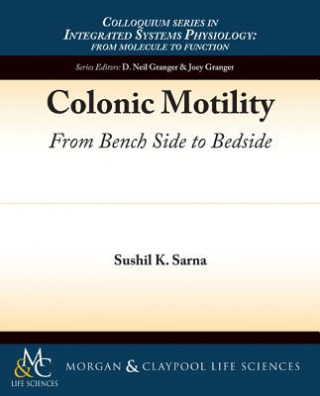
Kniha Colonic Motility Sushil Sarna

Colonic Motility

Autor: Sushil Sarna
Jazyk: Angličtina
Väzba: Brožovaná
Dostupnosť: Skladom u dodávateľa
Odosielame za 9-15 dní
44.61
Three distinct types of contractions perform colonic motility functions. Rhythmic phasic contraction...

Informácie o knihe

Autor
Jazyk
Angličtina
Väzba
Kniha - Brožovaná
Vydalo
2010
Stránok
157
EAN
9781615041503
ISBN
1615041508
Enbook ID
04838995
Hmotnosť
300
Rozmery
187 x 235 x 9

Kompletný popis

Three distinct types of contractions perform colonic motility functions. Rhythmic phasic contractions (RPCs) cause slow net distal propulsion with extensive mixing/turning over. Infrequently occurring giant migrating contractions (GMCs) produce mass movements. Tonic contractions aid RPCs in their motor function. The spatiotemporal patterns of these contractions differ markedly. The amplitude and distance of propagation of a GMC are several-fold larger than those of an RPC. The enteric neurons and smooth muscle cells are the core regulators of all three types of contractions. The regulation of contractions by these mechanisms is modifiable by extrinsic factors: CNS, autonomic neurons, hormones, inflammatory mediators, and stress mediators. Only the GMCs produce descending inhibition, which accommodates the large bolus being propelled without increasing muscle tone. The strong compression of the colon wall generates afferent signals that are below nociceptive threshold in healthy subjects. However, these signals become nociceptive; if the amplitudes of GMCs increase, afferent nerves become hypersensitive, or descending inhibition is impaired. The GMCs also provide the force for rapid propulsion of feces and descending inhibition to relax the internal anal sphincter during defecation. The dysregulation of GMCs is a major factor in colonic motility disorders: irritable bowel syndrome (IBS), inflammatory bowel disease (IBD), and diverticular disease (DD). Frequent mass movements by GMCs cause diarrhea in diarrhea predominant IBS, IBD, and DD, while a decrease in the frequency of GMCs causes constipation. The GMCs generate the afferent signals for intermittent short-lived episodes of abdominal cramping in these disorders. Epigenetic dysregulation due to adverse events in early life is one of the major factors in generating the symptoms of IBS in adulthood. Table of Contents: Introduction / Regulatory Mechanisms / Colonic Motility in Health / Colonic Motility Dysfunction / References

Mohlo by vás zaujímať

Uranography

Charles Augustus Young
11.34

Shadow Reigns

K. S. Marsden
11.93
13.59
13.59

Tough Cookie

EDWARD HEMINGWAY
14.67
14.37
13.49
36.78
41.38
66.42

Bringing Together

Maxine Kumin
14.18
27.39
14.27

Colonic Diseases

Timothy R. Koch
107.12
54.00

Zákazníci, ktorí si kúpili túto knihu, kúpili tiež

7.82
11.05

MEDIACION EN LA ESCUELA

ROZENBLUM DE HOROWITZ
17.70
10.36

CRONOGRAFISMOS

ALVAREZ DIAZ
25.13
24.55

Marokkanische Bilder

Roth Abraham Roth
18.19
7.92

Conservas y mermeladas

JEAN MARC HENEUY
9.77

Kanarki

Jabłoński Krzysztof Michał
4.59