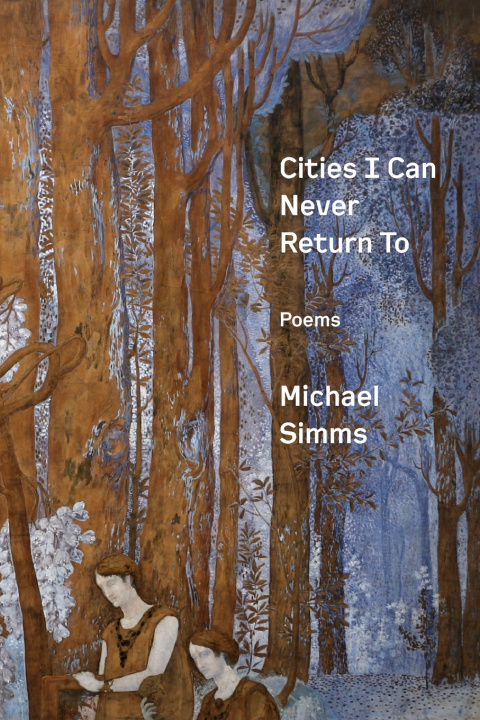
The first poem of Cities I Can Never Return To recalls the poet's experience as a six-year-old boy crawling under an old Packard with his dad who, compelled by a need for clarity in an uncertain world, explains the machinery of the drive train he doesn't actually understand. In the second poem, the narrative moves to the forced transition to premature manhood caused by violence. And in the third poem, the boy's sense of the ghosts of the past are manifested in the family's history with trains which represent both an industry where men work as well as a means to escape their lives and begin anew. In the fourth poem "The Tears of the Barber in Snyder Plaza Near the Fountain, Dallas, Texas 1973", the young man senses the grief men carry and their confusion with the mystery at the center of their lives. The young man and his father drive to Iowa to deliver him to graduate school, and the father reveals both his dangerous macho attitudes by racing another driver on the highway, as well as a sincere desire to bless his son's ambition to pursue beauty. The Apache Kid recalls a story of his father's fight in the ring where he was beaten terribly by a young Apache warrior which brings up the violence of the country's founding as well as the poet's vow to break the cycle of violence. The second section explores the young man's alcoholism and addiction and the terrible sadness and tragedy that causes it and is furthered by it. The third section recounts tender moments between the poet and his father. Here the poet speaks movingly of his father who has passed. The fourth section praises men, his friend John Checkeye who owns a shop which sold semi-precious stones; his grandfather Melvin, a 'man's man' who loved hand tools and fishing; and the poet's son who has carried on the family tradition of craft and hard work. Simms also praises his friends Tony Hoagland and Ross Gay for their startling poems and performances. The final section are poems about family life and spiritual awakening. The poet learns to forgive his father and to embrace his own spirituality discovered through art and nature.